|
|
Invitation to be Interviewed by
Edwin Rutsch
One on One Video Interviews
Dialogs on How to Build a Culture of Empathy
As an expert on the nature and experience of empathy, I'd like to
interview you. I've interviewed many 'Empathy
Experts', including top
researchers, scientists, educators, artists, etc. I am interviewing empathy experts using Skype or
Zoom video conferencing. If you would be willing
to share your stories, insights and experiences about the nature of empathy, I would like to interview you. Just
send me a email and we can
line up a date and time.
Interview Process
I will email you the details of how to do the interview with Zoom video
conferencing.
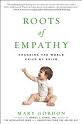
Empathy Book Review Copy Request
Requesting review copy of the book. The publisher's marketing department
generally want to know how the interviews will be promoted. Below is
this information.
Edwin Rutsch has video interviewed over 300 authors and experts on the
topic of empathy.
These interviews are;
1.*
Uploaded to Youtube and
to
Facebook
2.* Posted to the
Center for Building a Culture of Empathy website.
3.* Posted to
Culture of Empathy Facebook page. (30,000+ likes) From here it is
shared to a variety of related Facebook groups.
4.* Shared to
Edwin's Facebook
friends. (5,000)
5.* Sent to our email
Empathy Movement Newsletter. (6,000 subscribers)
6.* Curated to
Empathy Circle Magazine. The latest news about empathy from
around the world. Has over 8,000 articles on empathy curated. (23,000
followers)
7.* Posted to
LinkedIn Empathy
Group.
8.* Posted and reposted to various social media channels.
Mail Book Review Copies To:
Edwin Rutsch
515 Kearney St
El Cerrito, CA 94530
Phone: 510 528 9895
Past Interviews. Also See the Home Page
| |
|
Maia Szalavitz: Dialogs on How to Build a Culture of Empathy |
|
 |
 |
Coauthor: Born for Love: Why Empathy Is
Essential and Endangered
Empathy - fully expressed in a community of
nurturing interdependent people - promotes health, creativity,
intelligence, and productivity. In contrast, apathy and lack of
empathy contribute to individual and societal dysfunction,
inhumane ideologies, and often brutal actions.
Sub
Conference: Science |
|
|
Arianna
Huffington: Dialogs on How to Build a Culture of Empathy |
 |
 |
 |
Arianna Huffington is president and editor-in-chief of the Huffington Post Media
Group. She is the author of numerous books including ,
On Becoming
Fearless...in Love, Work, and Life.
Here is an
interview I did with Arianna via email.
How can we build a culture of empathy? |
"To a physicist a
critical mass is the amount of radioactive material that must be present
for a nuclear reaction to become self-sustaining. For the empathy
movement, a critical mass is when the empathy habit is cultivated by
enough people that it can begin to spread spontaneously. I think of it
as an outbreak of a positive infection. And everyone has the potential
to be a carrier. So one thing we can do is to spread it as widely as
possible...
I
think the opposite of empathy is the projection of our own fears onto
others. We've seen this over and over again throughout American history.
In times of economic upheaval, when huge numbers of people are losing
their jobs, losing their homes, and feeling powerless to do anything
about it, it has always been the case that people look for scapegoats.
Empathy is the antidote to that."
Sub
Conference: Journalism and Media.
|
| |
|
Frans de Waal talks with Edwin about
the Nature of Empathy |
 |
 |
How can we build a culture of
empathy?
I think it is important in society, especially at the moment.
Now that we have come out of this period where greed was so good. I
think it is important to emphasize that there are alternative ways
of looking at society. A society where solidarity is important and
caring about others is important.
Sub Conference:
Science |
| |
|
Paul Ekman talks about the
Nature of Empathy and Compassion with Edwin Rutsch
|
 |
 |
How can we build a culture of
empathy?
'The survival of the planet as we know it depends on global
compassion...
If I was president, thank god I'm
not, I would start a Manhattan Project on global empathy. It has the
urgency of the Manhattan Project. It needs the bringing together of
the best minds in the world to focus on this issue, because there is
an urgency too it. I think Al Gore was right, that time is running
out. We can't wait 20 or 40 years to figure out what to do with this
problem."
Sub Conference:
Science |
|
|
Howard Zehr: How
to Build a Culture of Empathy with Restorative Justice
|
 |
 |
Widely known as “the grandfather of restorative justice,”
Zehr began as a practitioner and theorist in restorative justice in the
late 1970s at the foundational stage of the field. Author of many books
including The Little Book of Restorative Justice. |
We talked about the role of empathy as a foundational value in the
restorative justice movement. Edwin thinks a more accurate term would be
restorative empathy. Howard has said, "This vision of mutuality is
supported by neuro science and attachment theory. The new neuro science is
teaching us that we as a human being, our brains are designed to connect
with other people."
Sub
Conference: Justice |
|
There are many more interviews. Explore the
website for more. |
|