Dr. Kristin Neff is an Associate Professor in
Human Development and Culture, Educational Psychology Department,
University of Texas at Austin. During Kristin’s last year of graduate
school in 1997 she became interested in Buddhism, and has been practicing
meditation in the Insight Meditation tradition ever since.
More and more, psychologists are turning away from
an emphasis on self-esteem and moving toward
self-compassion in the treatment
of their patients.
While doing her
post-doctoral work she decided to conduct research on self-compassion – a central construct in Buddhist
psychology and one that had not yet been examined empirically. Kristin is
author of
Self-Compassion: Stop Beating Yourself Up and Leave Insecurity Behind.
"More
and more, psychologists are turning away from an emphasis on self-esteem
and moving toward self-compassion in the treatment of their patients—and
Dr. Neff’s extraordinary book offers exercises and action plans for
dealing with every emotionally debilitating struggle, be it parenting,
weight loss, or any of the numerous
trials of everyday living."
Sub Conference: Self-Empathy and
Science
1:00 What is the most important value to you
personally?
compassion in general
been interested in self-concept
how compassion applies to the self
Compassion is a huge value of mine. Now I like
to use the term open-heartedness, because compassion tends to be
specific to the context of suffering. Of course we want to have open
hearts in face of suffering, but also want to have open hearts in
the face of joy and when we are at our bests and have great
successes and achievements. Just keep our hearts open no matter what
happens, positive, negative or even neutral. Open mind and open
heart, just trying to stay open.
2:00 How did that value become important to you?
open minded parents
went through intellectual period
7 years shut down
unhappy place - became emotionally dead
Started studying Buddhism - open mind - open heart -
compassion
Son with autism
open mind - open heart helped
trip to Mongolia
to shamans and made film
Open heart has a transformational quality
Open mind - open heart approach, letting it emerge
instead of controlling it leads to a lot of happiness.
7:00 Any specific insights happen?
was shut down, had an affair, was unhappy,
through Buddhism leaned compassion
sitting with a group, we talked a lot about
self-compassion
a light bulb went off.
started seeing how beneficial it was
10:00 Any metaphor for self-compassion?
a loving mother caring for her crying child
saying compassionate words
why does parent care for child, the mammalian care
system
Oxytocin level up - reduces cortisol level
For me open-heartedness is the core state and it
manifests differently. So open-heartedness toward your
suffering is compassion, open-heartedness for my suffering is
self-compassion, open-heartedness for your joy and accomplishments,
there's a term in Buddhism is called
Mudita, also
called sympathetic joy, so I can feel with you, in your happiness,
as well as feel with you in your sorrow.
Open-heartedness is the same receptive intellectually
open and emotional mindset. And then when it encounters different
objects it has a different flavor. The idea if nothing is coming up,
and your just open, that's equanimity. From my perspective
it's all the same state, it's just what's arising in awareness.
13:00 How do empathy, self-empathy, self-compassion and
compassion relate?
how are you defining empathy? the term is defined 5
different ways
starting with mirror neurons.
emotional perspective taking,
emotional resonating
con-men have great empathy skills
can use the emotional awareness to take advantage
of you
sympathy is I'm aware of what your feeling and I care
about it
compassion includes common humanity
interconnectedness
pity
are all related
son has autism - emotional perspective taking is
difficult
my son is very interested in emotional expressions
Simon Baron-Cohen
obvious displays of emotion - they are right there.
they will comfort you, cuddle you
empathy is not the same thing as sympathy or
compassion
it may not be necessary
Aspergers have difficulty reading emotions
if you say clearly, this is what I'm feeling, they
still care as much as anyone else.
what is the source of the information
mirror neurons
if you tell me explicitly in a medium that I can
get that information, then there is no reason the heart can't
respond
you can be very empathically in tuned and not give
a damn because your a conman
It's important with autism not to assume that someone
that can not feel empathy can not feel sympathy
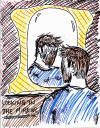
18:50 Do you have a metaphor for empathy?
a mirror
19:30 Self-empathy?
there's not a lot of research on it, not in an
academic context
am I aware of my own emotional process
Self-empathy - it may be mindfulness
20:20 There's a lot of ways these terms are used
that's the problem
21:00 You had just given a presentation on
self-compassion as a source of motivation?
self-criticism as source of motivation
research says it's not a good motivator
self-compassion motivates for other reasons
care about yourself and want to alleviate suffering
25:00 Connection as a source of happiness?
feeling of common humanity - we're all in this
together
problem with self-esteem or narcissism, you may feel
good about yourself but you are also undermining your own happiness
feel isolated and separated from others
self-compassion is being aware that this is a
shared human condition
can have a send of happiness through the care and
sense of connectedness you give yourself
metaphor of semisweet chocolate
sweet and bitter - holding suffering and common
humanity
seeing things as they are but bringing in
connectedness
28:00 A consoling quality?
letting go of judgment
mindfulness - just let it be
self-compassion is about the person experiencing what
is happening.
mindfulness can hold a feeling of hurt
self-compassion - I'm sorry your hurting -
consoling,
actively soothing and comforting yourself because
your suffering
releasing Oxytocin and opiates, you can feel it in
your body
feeling of warmth, safety
30:00 Religion and finding Jesus. Seems very similar,
having someone to console you.
Self-compassion in other traditions. studies would be
good
Jesus is always there; comforting, guiding, soothing,
compassion
in Christianity some focus on the compassion part and
some on the hell bit.
hell bit is more linked to self criticism.
31:50 How do you see your work going forward from this
point?
a lot of research to do on self-compassion
personally - I'm interested in teaching
self-compassion
workshops
how to help people have it?
practice it
continue doing research
33:20 How does empathy fit in with the work you're
doing?
teaching self-compassion in the schools explicitly
teaching the problems with self-esteem
start young
work with prisoners to mindfulness
Vets with PTSD
Open heartedness is towards everyone
I sometimes I get very hopeful and then,, it's almost
a race
36:00 Would true deep empathy really manipulate and
hurt somebody?
it all depends on how you define it.
if it's just cognitive perspective taking as
applied to emotions
feeling for, caring for, resonating with, they are
different
we need a lot more clarity about these terms
all these arguments get so muddled
we need a new conference about what we mean with
these terms
We can get a conference going to see how we can get the
different communities together.
the people doing Nonviolent Communication work do a
lot of work on this
they have boots on the ground.
it would be wonderful to have a forum for us all to
just talk with one another.
In this panel discussion,
Kristin Neff, Christopher Germer
and Edwin Rutsch discuss the question,
What is the Relationship Between
Self-Empathy, Empathy, Self-Compassion & Compassion? There is
a great deal of confusion about the
meanings and definitions of self-empathy, empathy, self-compassion
& compassion. We might be talking about the same experience,
but are using different words, or are talking about different
experiences and are using the same word, etc.
There is a great deal of confusion about the
meanings and
definitions of self-empathy, empathy, self-compassion
& compassion. We might be talking about the same
experience, but are using different words.
Some people,
for instance, say there is compassion fatigue. Recently some in the
compassion community have been saying it's really empathy fatigue.
Kristin feels personal distress may be a more
accurate term. Edwin feels there is no such
thing as compassion or empathy fatigue, it is really more
accurately described as empathy and compassion deficit fatigue.
Join us for a wide ranging dialog about this and more with leaders
in the field of empathy and compassion.
Video:
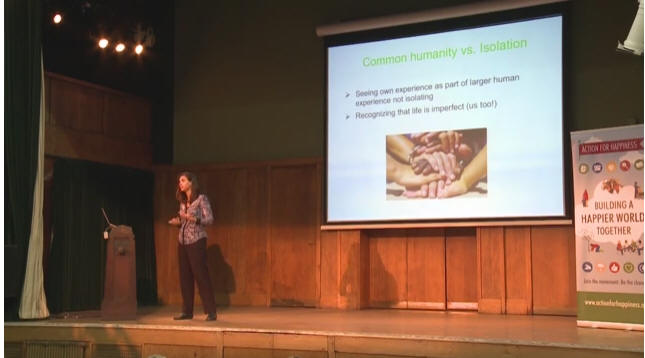
Self-Compassion with Dr Kristin Neff
Dr Kristin Neff shows how we can be happier - and better placed to help
others - by learning to be kind and compassionate to ourselves. This
talk was filmed at an Action for Happiness event in London on 26 July
2016.
9 October 2014 - This Compassion in Action webinar was presented by
Kristin Neff, PhD, Associate Professor of Human Development and Culture,
Educational Psychology Department, University of Texas at Austin and
Chris Germer, PhD, author of The Mindful Path to Self-Compassion.
Self-compassion involves treating ourselves kindly in times of emotional
distress, just as we would a close friend we care about.
The Liberating Power of Self-Compassion (podcast)
"Tami Simon speaks with Dr. Kristin Neff, a professor of human
development and culture at the University of Texas and a practitioner of
Buddhist meditation. The recent book and documentary The Horse Boy
illustrate her and her family’s adventure with autism. With Sounds True,
Kristin has created the audio program Self-Compassion Step-by-Step,
which includes clinical [...]"
- The latest research on empathy and compassion
- Tools to cultivate these social skills in our professional life
- Case studies of organisations and public institutions"
Self-compassion
Self-kindness v self judgment
treating with care
active soothing and comforting
Common humanity v isolation
we are part of a larger human
experience
life is imperfect
Mindfulness v over identification
be with painful feelings
avoid extremes don't run away
motions with the hand
anger
openness
self-compassion
Self criticism - threat defense system
Self-compassion scale (Neff 2003)
Research is exploding
Benefits
Linked to well being
Reductions in anxiety, depression,
stress, rumination, perfectionism, shame, negative body image
More: life satisfaction happiness,
connecters, self-confidence, optimism, curiosity, gratitude
Loving connected presence
Linked to motivation
greater desire to learn and grow
more likely to try again when we fail
Linked to health behaviors - not self
indulgent
Linked to personal personal
accountability
Linked to coping and resilience
Linked to better romantic relationships
Linked to other-focused concern
more forgiveness and perspective
taking
more compassion for others, empathy,
altruism
Self-compassion for caregivers
compassion or empathy fatigue
Self-Compassion
with Dr Kristin Neff
"Dr Kristin Neff shows how we can be happier - and better placed to help
others - by learning to be kind and compassionate to ourselves. This
talk was filmed at an Action for Happiness event in London on 26 July
2016. "
Kristin Neff: Mindfulness and Self-Compassion
"Kristin Neff, Ph.D., is an associate professor in human development and
culture at the University of Texas, Austin, and the author of the book
"Self-Compassion: Stop Beating Yourself Up and Leave Insecurity Behind"
(William Morrow, 2011).
This talk is from the "Practicing Mindfulness & Compassion" conference
on March 8, 2013. The Greater Good Science Center co-hosted this
conference with Mindful magazine."
Although the term "compassion fatigue" is well-known,
some psychologists are starting to argue that the term should be changed
to "empathy fatigue." Empathy can be defined as emotional resonance --
feeling what others are feeling. Our brains actually have specialized
mirror neurons designed for this purpose. Mirror neurons evolved to help
us quickly know if someone is friend or foe by registering feeling
2012-03-14 - The Power of Self-Compassion
"Jason Marsh interviews Kristin Neff. Kristin Neff discusses how
self-compassion differs from self-esteem, why self-compassion can be
hard for Americans, and the transformative effect it had on her own
life--part of Greater Good's podcast series. Kristin Neff discusses how
self-compassion differs from self-esteem, why self-compassion can be
hard for Americans, and the transformative effect it had on her own
life--part of Greater Good's podcast series."
Kristin Neff at Books Inc in Berkeley, CA (June 2, 2011) talking
about her book, Self-Compassion: Stop Beating Yourself Up and Leave
Insecurity Behind. Kristin teaches readers how to silence self-criticism
and replace it with self-compassion in order to fulfill their highest
potential and live happier, more fulfilled lives.
Event Post
transcripts needed - if you
would like make an outline transcript of this video while you watch, let
me know (Edwin).
here's a sample transcript.
2011-06-01 The Science of Self-Compassion, Dr. Kristin Neff
- At Stanford University
During Kristin’s last year of graduate school in 1997 she became interested in Buddhism, and has been practicing meditation in the Insight Meditation tradition ever since. While doing her post-doctoral work she decided to conduct research on self-compassion – a central construct in Buddhist psychology and one that had not yet been examined empirically.
2011-05-24 -
Self-compassion for caregivers
If you're a caregiver, you need self-compassion! Think of all the
generous, kind people you know who constantly give compassion and care
to others, yet continually beat themselves up. Most of us are quite
practiced at being supportive and giving to others, especially those of
us who find ourselves in
caregiver roles. Whether we have a special needs child, a
parent with
Alzheimer's, an ill partner, or are in a caregiving profession such
as being a nurse, therapist, or teacher, we know to give support,
comfort and compassion to the people who need us. But how many of us
offer that same level of compassion and care to ourselves?
2011-05-24 -
Hard on Yourself? Try Self-Compassion
Researcher Kristin Neff
reveals the benefits of going easy on yourself: less anxiety, less
conflict, and more peace of mind.
In this incredibly competitive society of ours, how many of us truly
feel good about ourselves? When I first came across the idea of
“self-compassion,” it changed my life almost immediately. It was during
my last year in the human development doctoral program at the University
of California, Berkeley, as I was putting the finishing touches on my
dissertation. I was going through a really difficult time following the
breakup of my first marriage, and I was full of shame and self-loathing.
I thought signing up for meditation classes at a local Buddhist center
might help. As part of my exploration, I read Sharon Salzberg’s classic
book Lovingkindness and was never the same again.
2011-05-11 -
Self-compassion may matter more than self-esteem
A budding field of research has psychologists finding that
self-compassion may be the most important life skill, imparting
resilience, courage, energy and creativity. It's also a skill many
people lack...
Self-Compassion.org - Defining Compassion
Having compassion for oneself is really no different than having
compassion for others. Think about what the experience of compassion
feels like. First, to have compassion for others you must notice that
they are suffering.
2011-02-28 -
Go Easy on Yourself, a New Wave of Research Urges NYT
That simple question is the basis for a burgeoning new area of
psychological research called self-compassion — how kindly people view
themselves. People who find it easy to be supportive and understanding
to others, it turns out, often score surprisingly low on self-compassion
tests, berating themselves for perceived failures like being overweight
or not exercising.
2011-04-02 -
How ‘self-compassion’ trumps ‘self-esteem’
Kristin Neff, a professor of human development and culture at the
University of Texas, is considered a pioneer in self-compassion
research. She published her first paper on the subject in 2003, and,
since then, there have been more than 100 academic journal papers on
self-compassion by a range of psychologists and neuroscientists.