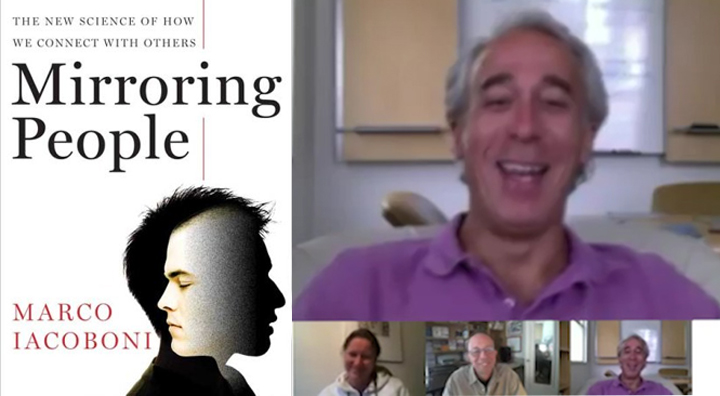
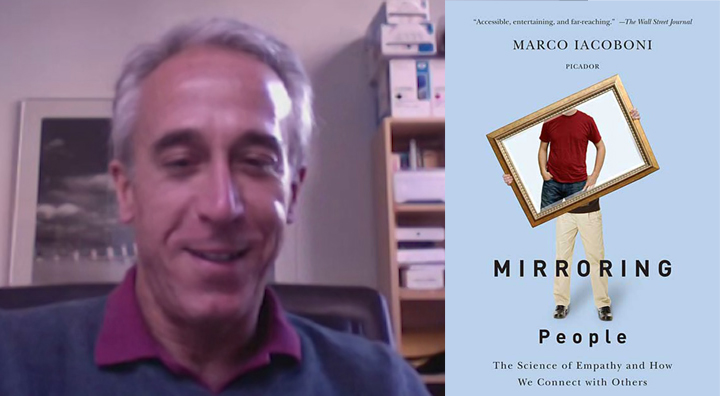
Marco Iacoboni is Professor of Psychiatry and Biobehavioral
Sciences and Director of the Marco Iacoboni Lab, UCLA Brain Mapping Center
at the University of California, Los Angeles.
"Empathy plays a fundamental role in our social lives. It allows us to
share emotions, experiences, needs, and goals. Not surprisingly, there is
much empirical evidence suggesting a strong link between between mirror
neurons (or some general forms of neuronal mirroring) and empathy."
In this interview,
Marco Iacoboni challenges the traditional Western understanding of human
nature as selfish and struggling for surviving and suggests that
neurologically and evolutionally we are predispositioned to create
empathic connections. A culture of empathy can be increased by:
becoming aware about our biological capacity for empathy through mirror
neurons,
having intention to increase culture empathy,
creating more empathic living environment
decreasing the focus on differences and labeling
increasing the focus on us (similarities)
increasing empathic behavior of governments, leaders and media....
In this second interview, Marco Iacoboni,
Lidewij Niezink
and Edwin Rutsch discuss
Definitions, Measurements & Metrics of empathy. Marco says,
"I think what's interesting to me most is to define metrics of empathy.
How can I measure this thing? Why it matters? If we want to design
interventions to improve empathy we need to agree upon ways of quantifying
it. People do get bogged down in debates on definitions and don't even get
to the point of trying to discuss metrics of empathic behavior. This slows
down progress, I think" Sub Conference:
Science
Video
Transcriptions: If you would like to take empathic action
and create a transcription of this video, check
the volunteers page. The transcriptions will make it easier for
other viewers to quickly see the content of this video.)
Marco Iacoboni challenges the traditional Western understanding of
human nature as selfish and struggling for surviving and suggests that
neurologically and evolutionally we are predispositioned to create
empathic connections. Culture of empathy can be increased by: having
intention to increase culture empathy, becoming aware about our
biological capacity for empathy, creating more emphatic living
environment, decreasing the focus on differences and labeling -
increasing the focus on us (similarities) , increasing emphatic behavior
at governments, leaders and media.
Transcript
0:06 – 1:52 Introduction of Marco Iacoboni (his work, book, web,
research interest)
1:53 – 2:56 Marco introduces the beginning of his research,
mirror-neuron cells, brain imaging in UCLA;
2:56 – 6:00 Explanation of what mirror-neurons and mirroring are,
mirroring as foundation of empathy and connection among people
6:00 – 7:27 Marco challenges the traditional teaching claiming that
human being are selfish and struggle for survival and suggests that we
have natural predisposition to be empathic.
7:27 – Science discovered system in brain that makes human empathic ,
book about this written for wider public
8:23 - The fact that we reflect about empathy gives are more capacity to
be empathic
9:25 – 10:25 difference between Western culture being individualistic
and other cultures which are more collectivistic, Eastern philosophy
reflects more the connection between self and others.
10:25 – 13:11 Just sending the message that we are empathic individuals
increases tendency to empathize, empathy is contagious. increasing
empathy with others starts with us put ourselves in other’s shoes
13:25 – 18:23 Defining empathy – different forms of empathy – different
definition of empathy are all reflecting some aspects of it. Need for
taxonomy to support research.
4 types of empathy:
Self empathy,
mirroring empathy,
cognitive empathy,
action empathy.
18:23 – 19:16 Start with self empathy is western approach, Sense of self
is developed through being part of community
19:17- 21:00 Need for clear definition of empathy
21:00 – 24:22 Way for improving empathy: mirroring, shift belief system
from labeling and divide us, and look at others as fellow human beings
with same needs. Edwin's experience about becoming empathic with his
family members due to paradigm shift.
24:23 - 28:00 Government, media and leaders have responsibility to model
empathic behavior as a way of increasing culture of empathy.
28:00 – 30:55 How intention is the first step for creation of culture of
empathy . Need for interdisciplinary collaboration and debated.
30:57 - 32:32 Mirror-neurons in a performing arts
32:34 - 34:17 Empathy and social structures – empathy can be increased
through architecture, classroom and lecture rooms setup
34.18 - 39.55 Arts as ways to increase empathy. Dance and mirroring.
Body as very basic way to synchronies and empathize. Our ability to to
predict where things are going can also increase empathy and
synchronization.
40.02 – 42.18 - Letting sense of self go and having sense of us is
nature of empathy. When we are born we probably have no sense of self
til around age 2, only sense of us. Sense of self is created by child’s
the interaction with care-givers.
42.20 – 44.10 There are two levels of empathy: mirroring (imitating) and
controlling levels, (which requires higher level of cognition to imagine
what other person may be feeling/seeing)..
"In this episode we cover the different roles mirror neurons play in the
brain, how they affect social cognition, learning, behavior, addiction
and how they determine how we interact with other people on a day to day
basis."
MARCO IACOBONI, MD PhD is Professor of Psychiatry and Biobehavioral
Sciences and Director of the Transcranial Magnetic Stimulation Lab at
the Ahmanson-Lovelace Brain Mapping Center. Iacoboni is a neurologist
and neuroscientist originally from Rome, Italy. He joined the faculty of
the Ahmanson-Lovelace Brain Mapping Center at UCLA in 1999. He is also
author of the book “Mirroring People: The Science of Empathy and How We
Connect with Others“
2012-01-16 -
Are We Wired for Empathy? What do mirror neurons teach about us about our
empathy? What do mirror neurons teach about us about our empathy? This week, leading
neuroscientist Marco Iacoboni visited with Six Seconds’ Master Class in Pajaro
Dunes, California, for an oceanside chat on mirror neurons and their
relationship to empathy and learning. A few of us collected some of the
takeaways:
What are Mirror Neurons? Mirror neurons are “smart cells” in our brains that allow us to understand
others’ actions, intentions, and feelings. The mirror neurons are in many
areas of our brains, and they fire when we perform an action such as grasping
an apple, and similarly we see others doing it. As it turns out, our mirror
neurons fire when we experience an emotion and similarly when we see others
experiencing an emotion, such as happiness, fear, anger, or sadness.
27:20 About the connections of minds through
mirror neurons
About mirror neurons - We are wired for empathy
We have been told we are selfish minds
done not fit with experience
evolution has made us to connect with others
how they were found
28:20 watching actions and doing them the same;
reaching for water and the intention
sort of mind reading
are important for imitation
for learning
transmission of culture
for creating social connection
That we are selfish beings is wrong. we are build
to empathize
30:50 Beliefs can separate people
we are a global society for empathy
31:20 other studies we've done
in the brain - see areas - some areas have more
of these mirror neurons
the more you are empathic the more you activate
this region of the brain
33:00 with mirror neurons - we are us
need to spread the word around
could increase our capacity for empathy
Dali Lama - I believe people are good, you are
supporting this.
Q. If mirror neurons are activated when we feel
others suffering?
D.L. Lots of complications
Marco - when you travel you become more
open minded
people change their minds t
Q. Some people have physical problems with mirror
neurons?
Marco - many factors for low empathy
life experiences - can be taught
understand how it works in the brain
Q. Extend compassion to animals?
Marco - degrees of empathy
beings with those like us
snakes - move differently
this could be over come
familiarity make empathy easier
can empathize with others who are more like me.
gives a physiological understanding
intelligence can help - each one does not want
to suffer
Marco - learn through embodiment
embody the concept
act out the packet switching - is very
effective
can do it intellectually
mimic you can fell more of the impact.
44:00 Q. Do politicians have empathy?
some people lack moral principles
science studies reality
relationship of Buddhism and science
Marco - Mirror neurons show our interdependence and
eastern philosophy has shown this
2010-01-12 - Mirror Neurons
One stop on Alan Alda’s Human Spark journey was a visit
with
Marco Iacoboni at UCLA. Marco’s area of interest is mirror
neurons. These cells in our brains are each active when we perform
very particular tasks – such as picking up a fork, or slamming a
door – and also when we are simply watching someone else do that
same task. In this video, Marco explains his research to Alan and
describes how mirror neurons seem sensitive to the intention behind
each specific action that’s observed.
Marco Iacoboni, a leading neuroscientist whose work has
been covered in The New York Times, the Los Angeles Times, and The Wall
Street Journal, explains the groundbreaking research into mirror
neurons, the "smart cells" in our brain that allow us to understand
others. From imitation to morality, from learning to addiction, from
political affiliations to consumer choices, mirror neurons seem to have
properties that are relevant to all these aspects of social cognition.
Overview of discussion
the discovery of mirror neurons
scientist are not always so open minded
mirror neurons and imitation
imitation is powerful way of communicating
it's a social glue
imitation leads to liking each other.
a powerful way of connecting to each other
mirror neurons and other minds - Intentions
can we get into the emotions of others
Evolution has made us wired for empathy
intimacy of self and others
mirror neuro help us create a sense of self
broken mirrors.
neuro science, empathy and society
7:00 - Brain Mechanisms for grasping
discovery of mirror neurons
the stories of how it happened.. they forgot
11: 50 - Mirror neurons are specialized in people
movements
congruent cell
broadly congruent cells
actions that are complimentary
hidden actions - don't' need to see the full action
14:23 - What are the properties of mirror neurons
specialized for actions
not only the same action but also complementary
actions
hidden actions
actions sounds
15:15 - mouth mirror neurons
17:00 Imitation
babies can imitate - (image)
testing imitation - mirror neurons and fMRI
mirror neuron areas
TMS of Broca's area (area essential to mirror
neurons)
language comes from movement
22:30 - model of mirror neurons - to date
we use our own neural machinery connected to mirror
neurons
can understand peoples intentions
24:50 understanding intentions of others
getting into the mind of others - Harry Potter
the mind is not a book
26:30 - tea party experiment - intentions
grasping intentions - to drinking or clean up
(images)
We feel the others
movements
intentions
feels
the other persons intentions inhabits our mind
Ludwigh Wittenstein - "We see emotions, We do
not see facial contortions and make the inference that he is feeling
joy, grief, boredom..."
31:00 - imitation is strong linked with empathy
visuals (photos)
we are chameleons
feeling what others feel - (image)
"I live in the facial expression of the other" Merlo-Ponty
a quantitative measurement of mirroring and empathy
test of children with empathy and mirroring - mirror
neurons as bio-marker of sociality
(image)
35:00 - mirror neurons creating a sense of self
the mirror recognition test - with children and
animals
toward 2 years old start recognizing themselves in
the mirror
then start mirror others more
we find ourselves by mirroring
37:45 - Tests - Mapping and Zapping the self
morphing self into the other
we build a sense of self from others
39:00 - broken mirrors in autism
using social interventions and imitations
imitation what the children are doing - Sally Rodgers
at U.C Davis
42:00 wrapup
We are wired to socialize
Solves the problem of other minds
Revision of long held beliefs
we are all individualist vers. wired for
social
Neuroscience and Society - he wants to convey this
message out to society
can change and shape society
46:00 Q and A
left and right hand
mirror neuron - wired and fixed ?
can learn
system learns quicly
Autism vrs. too much mirroring
supper mirror neurons - inhibit mirroring
Social consequences - can you train people to
be more empathic?
yes can teach people empathy
Autism
Mirror
Neuron Hypothesis of Autism
Marco Iacoboni, M.D., Ph.D. discusses the mirror neuron hypothesis of autism
which suggests that reduced mirror neuron activity may be a central feature of
autism. Mirror neurons are cells concerned with motor behavior and are
considered neural precursors of neural systems concerned with language and
social interactions. Series: M.I.N.D. Institute Lecture Series on
Neurodevelopmental Disorders
1:15 - Introduction
Mirror Neuron Hypothesis of Autism
We can use the mirror neuron system understanding to
work with autism
Marco Iacoboni, M.D., Ph.D., discusses data on mirror
neurons that suggest that their role in intersubjectivity may be more
accurately described as allowing interdependence. This interdependence
shapes the social interactions between people. where the concrete
encounter between self and other becomes shared existential meaning that
connects them deeply. Series: "M.I.N.D. Institute Lecture Series on
Neurodevelopmental Disorders" [6/2008]