|
|
Conference
- Panels
-
Possible Panels
- Facebook
Event -
Education -
Volunteer - [Planning]
International Online Conference on:
How Might We Build a
Culture of Empathy?
Permanently Ongoing
Sub Conference:
How to build a
culture of empathy with
Compassionate Communication or Nonviolent
Communication (NVC)
http://j.mp/KQZoVi
There are many trainers for the NVC process that have deep insights
and stories into lived and applied empathy. We will be interviewing as
many of the trainers as we can.
|
|
|
|
|
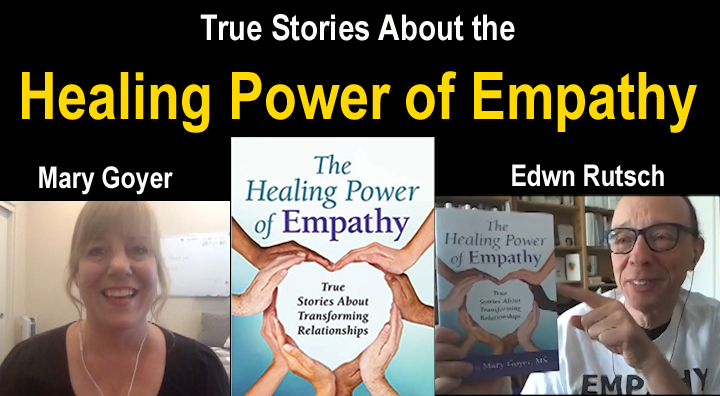
True Stories About The Healing Power of Empathy
Mary Goyer |
|
 |
|
Mary Goyer is Holistic Counselor, Trauma Specialist, & Executive
Coach. She supports organizations in cultivating innovative, collaborative, and
productive work cultures. Individual coaching and team trainings focus on
peak performance, conflict resolution, effective collaborative and
feedback skills, and managing personality challenges that impede employee
engagement. She is editor of:
The Healing Power of Empathy: True Stories About Transforming
Relationships.
|
|
"Empathy is an essential leadership skill and a
cornerstone of good relationships - but it can be hard to access when it's
most needed. Luckily, empathy is also a learnable skill. With mindfulness,
empathy has deescalated conflicts, combated loneliness, and built human
connections in the most unlikely places."

The Boyhood of Raleigh by Sir John Everett Millais
"What a difference it makes when a dash of empathy
is added into tense or important conversations
of every magnitude."
Sub Conference: NVC |
|
|
|
|
|
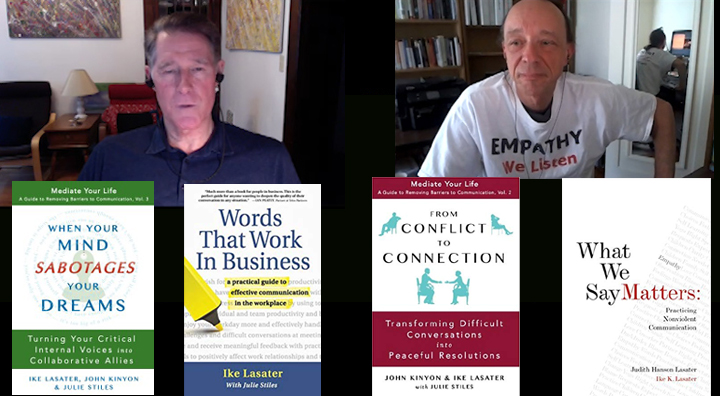
Conflict, Mediation and a Culture of Empathy
Ike Lasater |
|
|
|
Ike Lasater is the co-founder of Mediate Your Life, a training company
that helps people build better lives by changing how they respond to
conflict. With extensive training in Nonviolent Communication, Ike
teaches and coaches individuals and organizations in communication and
conflict resolution skills and has trained thousands of people in the
US, Europe, Asia, and Australia. He has served on the board of directors
for the Center for Nonviolent Communication and the Association for
Dispute Resolution of Northern California. Ike is a former trial
attorney for 20 years who co-founded a thriving San Francisco law firm.
|
|
At its core, the Mediate Your Life training is about
listening to - and really hearing - ourselves and others. It is about
increasing our capacity for empathy so that when triggered we can overcome
the body's natural "fight-flight-freeze" reaction. The process teaches how
to replace conflict with true collaboration, new possibilities, and
compassionate support.
Sub Conference: NVC |
|
|
|
|
|
Spinning the Threads
of Empathy
Miki Kashtan |
|
 |
|
"Miki Kashtan, Ph.D.,
is a co-founder of Bay Area Nonviolent
Communication and serves as its lead facilitator and trainer. She is
inspired by the role of visionary leadership in shaping a livable
future, and works towards that vision by living, using, and sharing the
principles and practice of Nonviolent Communication. "
She is the author of
Spinning Threads of Radical Aliveness: Transcending the Legacy of
Separation in Our Individual Lives.
From the book,
"Although the fundamental capacity for empathy, which is
part and parcel of mutual recognition, is an innate human feature, we
need to receive sufficient empathy early in life to be able to attain
and maintain true mutuality as well as empathic connection with
ourselves and others.

After the
Bath by
Mary Cassatt (Wikipedia)
"Most of us have not had
sufficient
empathy early in life"
Most of
us have not had sufficient empathy early in life, and for many of us
this means that our capacity for empathy gets stunted, both towards
others and towards ourselves. The healing force that allows us to
recover our lost capacity to connect is, once again, empathy. Empathic
connection with another is an almost indispensable condition of psychic
liberation. Although some individuals are able to choose strategic
discomfort on their own, for the most part, the challenges of the
journey are such that they require the presence of empathic others to
sustain it. Without empathy, the likelihood of retreat into our comfort
zone increases. With it, we are more capable of opening up to the
discomfort and the painful emotions which await us on the journey.
That empathy per se is healing has become progressively more accepted.
Being heard, in full, is one of the most profound experiences we humans
can have, and has a transformative effect that more often than not we
don’t anticipate. Even a few minutes of this experience can sometimes
transform seemingly intractable situations. Even after years of
practicing and teaching empathy, I still find myself astonished at the
immense power of it. In moments of intense conflict with someone, for
example, I can still forget that the entire conflict can be dissolved in
a few empathic exchanges, as has so often been the case."
Sub Conference:
Compassionate Communication (NVC) |
|
|
|
|
|
Building New Authentic Empathy Communities &
Cultures: Kelly Bryson & Edwin Rutsch |
|
 |
|
Kelly Bryson, MA, MFT is the author of the best selling
book, Don't Be Nice, Be Real –
Balancing Passion for Self with Compassion for Others. He is a licensed
therapist in private practice, lecturer, workshop facilitator, and
consultant. He has been an authorized trainer for the International Center
for Nonviolent Communication for over 20 years, and has trained thousands
in the US, Europe, and the Middle East. Kelly is also a humorist,
guitarist, singer, and songwriter. He in now working on building new
authentic empathy communities & cultures. Kelly
writes, "When I empathize with someone, I become a strong and gentle wind,
filling the sailboat of the other’s inner exploration. As the Wind, I
have no control over the steering of the boat. That is left up to the
captain of the ship, the person I am being present to. I do not try to
direct, only connect with where the other is in this very present moment.
I bring in no ideas of thoughts about the past or the future. I bring in
no thoughts of my own. I have no preference for where we go on this
journey – only that it come from the captain’s heart and choice. The
purpose of my presence is connection, never correction. I am a steady,
present trade wind, not an impatient and gusty gale."
"Empathy brings in nothing from the past. When I
am empathizing I am not remembering when I was having a similar
experience. In one sense I am not even there. The only thing present is
your experience, feelings and stories. I am being with the felt sense of
them. Relating to another experience is about you. Empathizing is about
them. Some people get so caught up in the fear of wondering whether they
are empathizing correctly that very little empathy or attention is left to
be with the other. It is not really about doing empathy or giving empathy
- it is being empathy."
Sub Conference: Compassionate Communication (NVC)
and
Building Empathic Community |
|
|
|
Melanie Sears:
How to Build a Culture of Empathy
|
 |
 |
Melanie Sears has been a trainer for the Center of
Nonviolent Communications since 1991. She works with businesses,
hospitals, nursing homes, hospices, individuals, couples and parents in
transforming their usual way of operations, interpersonal interactions and
dealing with conflict to one which is more compassionate, conscious and
effective.
|
|
Melanie presents Nonviolent Communication at conventions,
at universities, and at churches. She has been interviewed on the
radio and on TV and is the author of several books including: Humanizing
Health Care with Nonviolent Communication.
Sub
Conference: NVC
and
Health Care
|
|
|
|
Govert van Ginkel & Edwin Rutsch: Survivors of Sexual
Assault and Building a Culture of Empathy
|
 |
|
Govert van Ginkel is speaker, trainer, coach, facilitator
and mediator who is experienced in many different processes. He has a
background as a lawyer.
Govert says, "We thrive on connection and some even say
we are hard wired for connection, yet it can seem so hard to do when you
need it most. Empathy is the missing link. Empathy will help you support
yourself and connect with others in situations in which you normally
would feel lost." |
We
held two discussions, first we reviewed, step by step, his article,
Practical Empathy: As it applied to Survivors of Sexual
Assault. He says, "Empathy is a scare commodity in general and
specifically when you are the
victim of a crime. Practical application of empathy can make an enormous
difference in the outcome for both the victim/survivor of a crime, the
effectiveness of police and justice department, as well as, for all
others involved." In the second hour, we had a free style discussion about the nature of empathy and how to
foster it.
Sub
Conference: NVC
|
|
|
|
Stephanie Mattei & Edwin Rutsch: How to Build a Culture of Empathy in the
Family
|
 |
|
Stephanie Bachmann Mattei is a
Certified Trainer with The Center for Nonviolent Communication. Parenting
is Stephanie’s niche. Parenting is a powerful and far-reaching tool for
social transformation. Mahatma Gandhi’s said, "If we are to reach real peace in the world, we
shall have to begin with the children.”
Parenting is one of the most crucial ways to bring about social change
in terms of consciousness evolution. We are moving toward a more empathic child rearing. |
How to Build a Culture of Empathy?
Presently the three main unempathic "Parenting Tools" are; Corporal
Punishment, Guilt and Shame inducing communication (verbal and non-verbal),
behavior modification through rewards carrots and sticks. Research show these approaches do not foster empathy and emotional
intelligence. In order to change a habit, we need to know what to put in its place.
We need an empathic parenting approach.
Sub
Conference: NVC and
Sub
Conference: Home & Family
|
|
|
|
Jesse Wiens: Dialogs on How to Build a Culture of Empathy with Zen NVC
|
 |
|
Jesse Wiens is an internationally recognized Center
for Nonviolent Communication Certified
Trainer and the founder of ZENVC, an approach to the practice of Nonviolent
Communication (NVC) that
integrates meditation, mindfulness, and inner work. He has a passion for
bringing the best of Eastern and Western wisdom to bear on the problems
of today, supporting individuals, couples, and communities to come back
into wholeness. In this, he draws from seven years of living and
practicing in Zen monasteries, as well as training with NVC founder
Marshall Rosenberg, Center
for Understanding in Conflict co-founder
Gary Friedman, and BayNVC's
Restorative Justice program at
San Quentin State Prison. |
How to build a culture of empathy?
- Create opportunities for people to share and bear
witness to each other's celebrations (gratitudes) and mournings
(grief/despair/sadness) in a group.
- Create opportunities for people to share silence
together, and bear witness to their own breath.
- Familiarize yourself with the many ways that people
are disempowered in our culture, and understand how the two
suggestions above empower people; use these understandings as a
springboard to raise questions and spark critical and creative
discussions with others
- Jesse says empathy is like a rubber band.
It gets stretched out and that's fear, anxiety, disconnection, etc. It
automatically comes back into the natural shape.
Sub
Conference: NVC
|
|
|
Catherine Cadden: Dialogs on How to Build a Culture of Empathy with NVC
|
 |
 |
Catherine Cadden has been an educator since 1987 finding
alternatives to teaching, learning, and conflict resolution that work with
the principles of nonviolence.
Author of,
Peaceable
Revolution Through Education.
The book offers practical everyday guidance for creating peace
and connection in today's learning environments. |
How can we
build a culture of empathy?
1. Truly releasing enemy imaging that blocks compassion.
2. Remaining curious about each other and letting go our expectations based
on our assumptions and our fixed ideas about how people ought to behave.
3. Being clear about our needs in a way that does not hold them as more or
less important than another's.
Sub
Conference: NVC |
|
|
Fred
Sly & Vika Miller: Dialogs on
How to Build a Culture of Empathy in Prisons |
 |
|
Fred Sly, Program Director &
Vika Miller, Executive Director, The Oregon Prison Project.
Working
with Compassionate Communications/NVC to transform prisons
and make them cultures of empathy. Fred says
empathy is like a puppy dog pile
where
no-one is embarrassed to play and
all are included versus coldness and mechanical robots.
Vika says it's like a compassionate room where we can be
everything that we are. There is room, space and acceptance
for all that we are as human beings.
The opposite of empathy would be
a closed fist of disconnection,
resistance, closed heartedness.
Sub
Conference: Justice |
| |
|
Dian Killian: Dialogs on
How to Build a Culture of Empathy with NVC |
 |
|
Dian Killian
is
Executive Director
of
the
Center for Collaborative Communication.
Through sharing the consciousness and skills of Collaborative
Communication, we support people in hearing each other and being heard.
Empathy is like an open hand or warm bath versus a clenched fist.
How to build a culture of empathy?
See as many people as possible trained to listen empathically.
See that parents and those working with children can especially listen this way.
See that we all have opportunities for expressing/being heard around
"strong emotions".
Sub
Conference: NVC |
|
|
Jim Manske: Dialogs on How to Build a Culture of Empathy with NVC |
 |
|
Jim Manske
is a Compassionate Communications (NVC) trainer at
RadicalCompassion.org.
He says, empathy is like being a tracker that is following the
trail or a delicious banquet, the opposite is a mechanic that is trying to
fix everything.
How can we build a culture of empathy?
Supporting people in creating a life-serving system within themselves,
in their primary
relationship, family, workplace, neighborhood, and community.
Creating systems that reframe conflict as a necessary part of growth and
learning while creating a framework for resolving conflict in a
life-serving way.
Sub
Conference: NVC |
|
|
Jori Manske: Dialogs on How to
Build a Culture of Empathy with NVC |
 |
|
Jim and Jori Manske
offer training, mediation, facilitation, organizational transformation,
coaching, mentoring and classes in integrating
Compassionate-Nonviolent Communications (NVC).
Jori
says Empathy
is
like; 2 hearts beating together,
a salve for the heart, or walking with another in sync.
Punishment and domination are the antithesis.
How to build empathy?
Clarity of awareness and intention
- what is empathy and why it matters.
Cultural change can happen in a society within one generation if children
have a model of empathy, and education is a collaborative exploration...
Sub
Conference: NVC |
|
|
Eric Bowers: Dialogs on How to
Build a Culture of Empathy with NVC |
 |
|
Eric Bowers is a CNVC certified Nonviolent Communication
Trainer through the Center for Nonviolent Communication. Eric is also
life-long learner of Restorative Systems and is training in Restorative
Circles. He has worked as a Children Who Witness Abuse Counselor
and Victim Services Worker. |
|
|
Ray Talyor: Dialogs on How to Build a Culture of Empathy with NVC |
 |
|
Compassionate Communication/ Nonviolent
Communication (NVC) trainer.
How to build a culture of
empathy? Use the phone and Skype to ask for good empathy when upset
about a relationship (in order to support that relationship, not for
bitching/gossip). Use social networking to set up empathy connections as
well as share funny pictures of cats. Don't forget to
talk and listen to the neighbors |
|
|
Sarah Peyton:
Dialogs on How to Build a Culture of Empathy with NVC |
 |
|
Sarah Peyton is owner of Interpersonal Neurobiology and
Needs-Based Communication. She offers classes, workshops, teleseminars and
one-on-one sessions bringing together empathy and resonance with an
understanding of the brain for sustainable change that feels good.
How to build
empathy?
1. Lots of education on our own
Interpersonal Neurobiology - how our systems work in relationship, what
resonance is, how it calms us, how to recognize it. 2. An exploration of the way emotions affect
us physically, in particular rage and shame... |
|
|
|
 |
|
Dominic
Barters - Restorative Circles
One
of the things I experience when empathy is present, is that the blocks to
action, which does not exclude are removed. So one of the ways that I can
identify that empathy is present, is that whatever is impeding action is
gone, and that the quality that that action has is that it tends to
include, it connects, it brings pieces together, it resolve what appears
to be knotted and bond. |
|
|
|
|
 |
|
Inbal Kashtan
Bay Area Nonviolent Communication |
|
|
|
|
 |
|
Miki Kashtan
Bay Area Nonviolent Communication |
|
|
|
|
 |
|
Ike Lasater |
|
|
|
 |
|
Jean Morrison
Empathy is a quiet place.
Santa Cruz Nonviolent Communication |
|
|
|
 |
|
John Kinyon |
|
|
|
 |
|
Katy Dawson
Story of dealing with angry child with empathy.
|
|
|
|
 |
|
Kathy Simon |
|
|
|
 |
|
Lynda Smith |
|
|
|
 |
|
Newt Bailey
Bay Area Nonviolent Communication |
|
|
|
|
 |
|
Meganwind Eoyang
Bay Area Nonviolent Communication
|
|
|
|
|
 |
|
Rita Marie Johnson,
Founder of the Rasur Foundation and BePeace, talking about the nature and
importance of empathy. Empathy is like traveling down a beautiful
path to a friends house, I arrive at my finds house and we go into a hot
tub. |
|
|
|
 |
|
Scott Catamus
I try to have compassion and not
judgment.
|
|
|
|
|
 |
|
Shantigarbha
Warren
I’ve recently finished my book on
empathy ‘Empathy: the art of compassionate presence’ and I’m
currently negotiating with a US publisher. In the meantime, over
the summer I was keen to get on the road and share what I’d
learned in writing it. So I gave a talk in several locations
called ‘Empathy: what, why and how?’ |
|
|
|
|
|
|
more: |
|
|
Christy Michaels
Desiree Banzhaf
Kit Miller
Nora Hoffman
Nancy Kahn
Oren J Sofer |
|
|
|
|
|
|
|
|