Helen Riess, M.D. is Associate Clinical Professor of
Psychiatry,
Harvard Medical School and Director of the Empathy and Relational Science
Program at Massachusetts General Hospital.
The mission of the Program is to enhance empathy and
interpersonal relationships in healthcare. She is also Chief Technology
Officer of Empatheticswhich offers scientifically based empathy training proven to optimize
interpersonal engagement.
In this book, I hope to demonstrate how showing
greater empathy toward your fellow human beings can enhance your own life
and society as a whole. Through empathy, parents see their children for who
they are, and help them realize their potential. Teachers connect with
students in ways that help learners discover and expand there talents.
Businesses are more likely to thrive because they invest in the people
working for them. Politicians start to represent the needs of their
constituencies.
The arts have always been a connector for people of
all walks of life to learn more about one another, find common ground,
inspire curiosity rather than judgment, and provide shared mind empathic
experiences that remind us that all people are part of the fabric of
humanity.
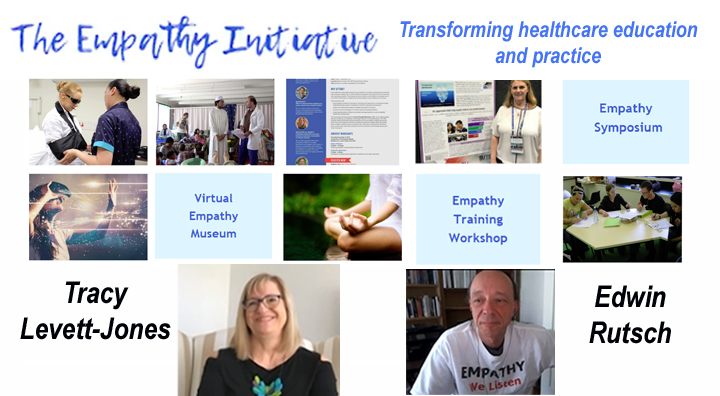
Tracy Levett-Jones is the Professor of Nursing Education and Discipline
Lead at the University of Technology Sydney, Australia. Her research
interests include: empathy, belongingness, clinical reasoning,
interprofessional education, cultural competence, simulation and patient
safety. Tracy has authored ten books, the most recent being
'Clinical Reasoning: Learning to think like a nurse'
and
'Critical Conversations for Patient Safety';
as well as nearly 200 book chapters, reports and peer reviewed journal
articles.
The
Empathy Initiative is a group of like-minded
academics and practitioners with a strong belief in the power and potential
of empathy to change lives and improve the quality of care provided to
patients/clients/residents.
Our group shares a commitment to undertaking collaborative
empathy research that has the capacity to transform education and practice.
The purpose of the Empathy Initiative is to generate high quality, rigorous
empathy/compassion research that informs and influences student learning
and patient care, either directly or indirectly.
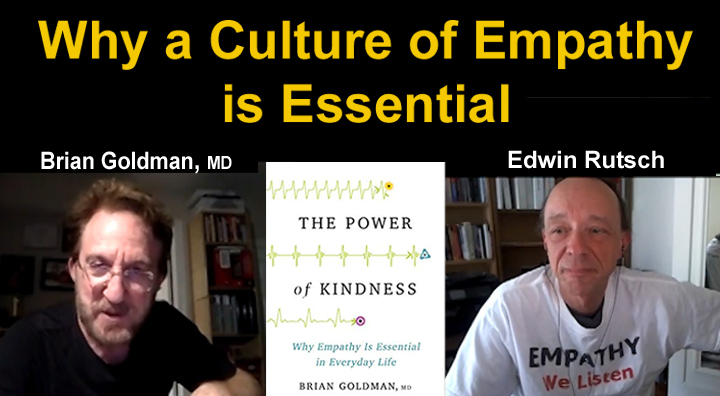
For more than thirty years, Dr. Brian Goldman has been an active
participant in and keen observer of the culture of modern medicine. Since
2007, he has hosted White Coat, Black Art, a multi-award-winning show on
CBC Radio that reveals what goes on behind a hospital's sliding doors.
Goldman is
author of:
The Power of Kindness:
Why Empathy Is Essential in Everyday Life.
As a veteran emergency room physician, Dr. Brian Goldman has a
successful career setting broken bones, curing pneumonia, and otherwise
pulling people back from the brink of medical emergency. He always
believed that caring came naturally to physicians. But time, stress,
errors, and heavy expectations left him wondering if he might not be the
same caring doctor he thought he was at the beginning of his career. He
wondered what kindness truly looks like
-
in himself and in others.
How can empathy transform health care?
Empathy is the way that we establish human connections. Without it,
relationships between people are just transactions and devoid of the
emotional warmth and meaning that I think is inherent in the human
condition. If we could put more empathy into health care, it would mean
that patients are more likely to follow the instructions of physicians and
to feel assured that the best is being done for them.
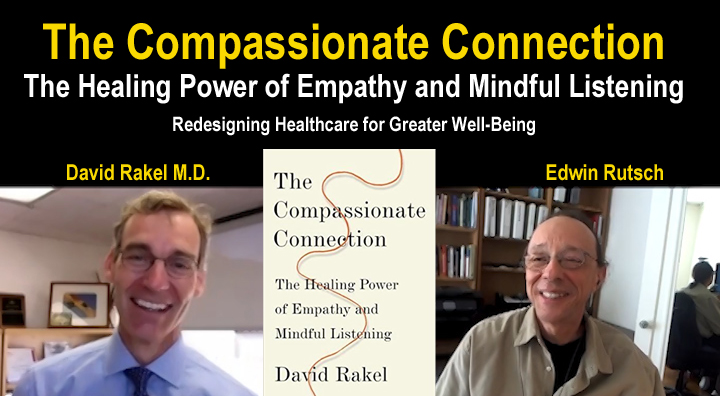
The Healing Power of Empathy and Mindful Listening
David Rakel
David Rakel, MD was the founder and director of the University of
Wisconsin Integrative Medicine program and is now Professor and Chair of
the Department of Family & Community Medicine at the University of New
Mexico Medical School in Albuquerque, NM.
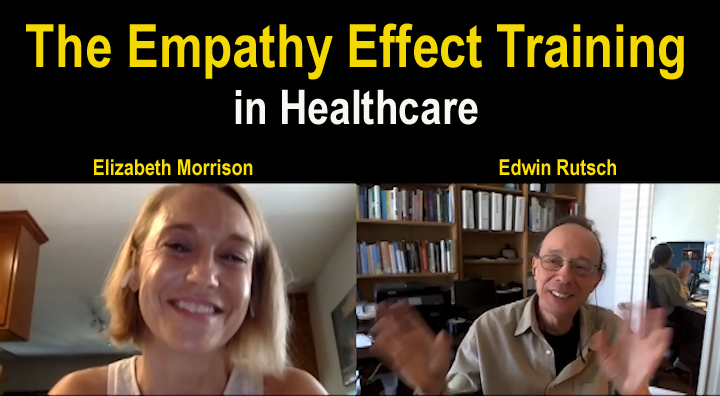
"An accomplished trainer, therapist and consultant, Elizabeth Morrison
specializes in helping health care organizations enhance human connections
in care provision. Her areas of expertise and passion are building
effective and sustainable integrated behavioral health (IBH) services,
developing patient-centered complex care programs, and providing
research-based training in empathetic communication for healthcare
professionals. Originally inspired by Carl Rogers'research
on the primary role of empathy in healing, she uses evidence-based
strategies to design trainings and consultations tailored to meet the
needs of a wide range of organizations." Elizabeth developed the Empathy
Effect Training and curriculum for teaching empathy skills in the
healthcare field with
the
Institute
for Healthcare Communication."
"Expressions of empathy are the
"secret sauce"
that ensure caregiving encounters are healing and not harmful.
They are essential for building connection and trust, and especially so
for interactions with people who have suffered trauma. Empathy is
universally accessible, free, an effective treatment by itself in many
situations
-
and it has no side effects!"
Empathy Effect
Jeremy Howick is
senior researcher at the Nuffield Department of Primary Care Health
Services at University of Oxford. His research lies at the crossroads of
philosophy and medicine. His interest in empathetic care grew out of his
interest in placebo effects.
Jeremy is also founder and director of the
The Oxford Empathetic Care
Program.
The Oxford Empathetic Care Programme (OxCare) is an
interdisciplinary research group that includes medical practitioners,
philosophers, psychologists, and sociologists.
Aims:
Promote
the importance of empathy in clinical practice.
This includes empathetic relationships between patients (and their
families) and healthcare practitioners, as well as empathetic
relationships between healthcare systems and patients/practitioners.
Objectives
1. To
develop and maintain a glossary of empathy (and related terms) definitions
2. To maintain a database of key measures of empathy
3. To identify and reduce contextual obstacles to empathy
4. Explore the relationship between evidence-based healthcare and
empathetic healthcare
5. To develop empathy training for healthcare practitioners and healthcare
managers
6. To develop a research program
7. To identify obstacles and facilitators to empathy
8. Explore the relevance of empathy to professional burnout and stress
9. To investigate whether the current model of revalidation is empathetic
10. To investigate how can empathetic care improve value-based healthcare
Antonio (Tony) Fernando is a medical doctor and
Senior Lecturer at the School of Medicine in the University of
Auckland located in
Auckland, New Zealand. His research interests include diagnosis
and treatment of insomnia and other sleep disorders. He is currently
working on a PhD on compassion in healthcare.
"We have suggested
that the scientific study of compassion in medicine may be enhanced when
conducted within a transactional framework in which compassion is viewed
as stemming from the dynamic interactions between physician, patient,
clinical, and institution/environment factors. The Transactional Model of
Physician Compassion offers a framework within which to identify and
organize the barriers and facilitators of physician compassion and thus
better inform future interventions aimed at enhancing physician
compassion."
Sub Conference:
Health Care
Danielle Ofri, MD is an essayist, editor, and practicing
internist in New York City. She is an attending physician at Bellevue
Hospital, and Associate Professor of Medicine at New York University
School of Medicine. Danielle is
co-founder and Editor-in-Chief of the
Bellevue Literary Review,
the first literary journal to arise from
a medical setting. Danielle's newest book -
What Doctors
Feel: How Emotions Affect the Practice of Medicine – explores the
hidden emotional world of the doctor, and how this impacts the medical
care that patients receive every day.
She writes, "It’s no wonder that the third year of medical
school figures prominently in studies that document decline of empathy
and moral reasoning in medical trainees... the erosion of empathy, for
example, may have long-reaching consequences. Patients of doctors who
score lower on tests that measure empathy appear to have worse clinical
outcomes. Diabetic patients, for instance, have worse control of their
blood sugar and cholesterol. Cancer patients seem to experience more
depression. Medication compliance diminishes. Even the common cold can
last longer."
Sub Conference:
Health Care
and
Arts
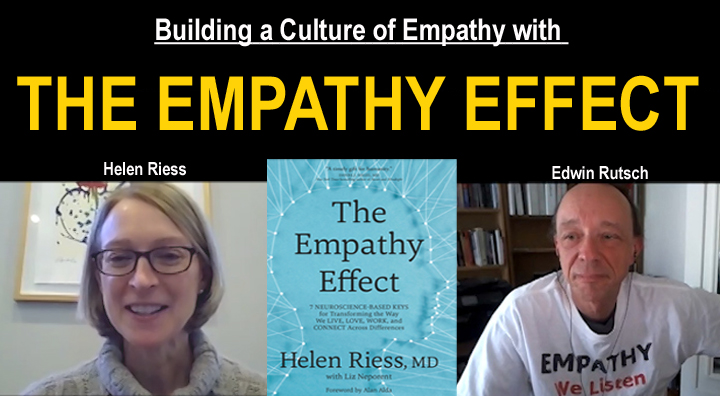
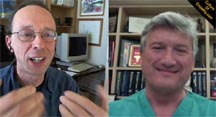
Edwin Rutsch,
Director of the Center for Building a Culture of Empathy, hosts a
discussion with two of the primary leaders in the movement to transform medical
culture from detachment to a culture of empathy.
Helen
Riess M.D., Ph.D is Associate Clinical Professor of
Psychiatry, Harvard Medical School and Director of the Empathy and
Relational Science Program at Massachusetts General Hospital. She
is Chief Technology Officer of
Empathetics
which offers scientifically based empathy training
proven to optimize interpersonal engagement.
Sub
Conference:
Health Care
Raúl de Velasco is director of Clinical Ethics at the
University of Miami Bioethics Program and Chair of the Baptist Health
Bioethics Committee. He says. "I am a physician who practiced Nephrology for over 30 years and had a
very large practice. My full training in medicine was at the University
of Miami. Most of my patients were on dialysis and needed kidney
transplants, they had a lot of problems, you learn how to detach from
their suffering but as I did that almost as a survival mechanism the
practice of medicine became less enjoyable more about numbers than of
people."
Raúl saw the importance of empathy for doctors and has been
working to promote empathy in the medical field. He is also looking
at developing a mutual empathic relationship between doctors and patients.
We did two interviews about his studies and work on empathy. In the second
interview, Raúl walked thought his Clinical Empathy Slide Show
Presentation. The presentation discusses;
1. Psychology of Empathy
2. Objectification and the ‘wiring’
3. Caring in Medicine
4. The Practice of Empathy
5. Problems with Empathy
Robin Youngson
M.D.,
is an anesthesiologist in New Zealand. He is
an International leader in the compassionate healthcare movement and
founded
HEARTS
in HEALTHCARE
whichis
an inspirational community of health professionals, students, patient
advocates, health leaders, and many others who are champions for
compassionate care. "We believe bringing like-minded people together is
the first step to re-humanizing healthcare around the world".
Robin is author of
TIME TO CARE: How to love your
patients and your job. He says, "my passion is to restore the heart of
healthcare and to make caring and compassion the daily lived experience
and practice of all in healthcare. Health professionals need compassion
and caring in the workplace as much as patients - the rates of burnout,
emotional exhaustion and hopelessness are far too high."
Sub Conference: Health Care
Jodi Halpern. M.D., Ph.D, is Associate Professor of
Bioethics and Medical Humanities at the University of California, Berkeley,
in the Joint Medical Program and the School of Public Health. As a
psychiatrist with a background in philosophy, she investigates how emotions
and the imagination shape healthcare decisions of clinicians and patients. She is author of
From Detached Concern to Empathy: Humanizing Medical Practice.
Clinical Empathy: "As a psychiatrist as well as
a faculty member in bioethics at UC Berkeley for almost two decades, I’ve
investigated what happens to patients when their doctors show a lack of
empathy. Doctors were trained to believe that emotional detachment from
patients is personally and professionally necessary, but experience shows
that patients don’t trust doctors who are aloof or superficially friendly.
Yet, only recently have studies proven just how harmful detachment and how
beneficial empathy is for healing...."
Sub Conference: Health Care and Science
Helen Riess, M.D. is Associate Clinical Professor of
Psychiatry,
Harvard Medical School and Director of the Empathy and Relational Science
Program at Massachusetts General Hospital.
The mission of the Program is to enhance empathy and
interpersonal relationships in healthcare. She is also Chief Technology
Officer of Empathetics
which offers scientifically based empathy training proven to optimize
interpersonal engagement.
Helen is a coauthor of the study,
Empathy Training for Resident Physicians. The study concluded;
"A brief intervention grounded in the neurobiology of empathy
significantly improved the physician empathy as rated by patients,
suggesting that the quality of care in medicine could be improved by
integrating the neuroscience of empathy into the medical education."
Empathy is like,
getting underneath the skin of another person, to merge temporarily with
their experience, then getting out, to reflect on the experience.
Empathy can be taught, although a certain endowment may be inborn,
research shows that it is a mutable trait. Our study demonstrated that
empathy could be increased significantly in the training group and it
decreased significantly in the control group. Sub Conference: Health Care
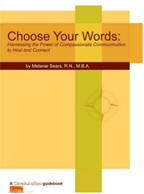
Melanie Sears has been a trainer for the Center of
Nonviolent Communications since 1991. She works with businesses,
hospitals, nursing homes, hospices, individuals, couples and parents in
transforming their usual way of operations, interpersonal interactions and
dealing with conflict to one which is more compassionate, conscious and
effective.
Dorrie Fontaine, is
Dean of the School of Nursing at the University of Virginia. At the school
she started the Compassionate Care & Empathic Leadership Initiative (CCELI)
"which exists to create dialogue around and preparedness for nurses who
deal every day with people in life-changing situations–one-time or chronic
illness, terminal disease, end-of-life care and even death itself–and all
the highly-charged, complex issues surrounding them.
The
CCELI focuses on systems that optimize patients’ and their family’s
quality of life, incorporate compassion and empathy into personal
behavior, interprofessional interactions and encounters with patients
and families. We’re developing clinical, educational and research
initiatives that further those aims. Our ultimate vision is to reduce
human suffering and promote health and well-being by fostering
compassionate people and systems."
"Can compassion be taught? UVa Nursing's all volunteer army of nurses,
physicians, administrators, professors and students are learning
concrete ways to insert compassion into every patient interaction -- and
they're bolstering their own resilience in the process."
How do those providing objective medical care,
especially around the grim subject of one's own death, provide
compassionate care without absorbing the emotions surrounding imminent
death?
Please describe your work and why the principle of
empathy is relevant to it?
The theory of Counter-Transference in Psychology
postulates that the practitioner's feelings are entangled with the
patient's. Does this also happen in the medical field? etc. Sub
Conference: Health Care
Richard Levin is an internationally recognized physician
scientist, scholar, cardiologist and educator. He is also the President
and CEO of the Arnold P. Gold Foundation. The Gold Foundation is a
not-for-profit organization dedicated to fostering humanism in medicine.
"It encourages the development of physicians who combine the high tech
skills of cutting-edge medical science with the high touch skills of
communication, empathy and compassion."
The organization says that, "As the
nature of doctor-patient relationship changes, compassion and empathy
are essential." The Foundation fosters the development of empathy in
healthcare thought a variety of ways and initiatives, such as,
lectures, conferences, physician networking, grants, fostering
scientific research, award ceremonies, a website, etc. Sub Conference: Health Care
Helen Riess, M.D. is Associate Clinical Professor of
Psychiatry,
Harvard Medical School and Director of the Empathy and Relational Science
Program at Massachusetts General Hospital.
The mission of the Program is to enhance empathy and
interpersonal relationships in healthcare. She is also Chief Technology
Officer of Empathetics
which offers scientifically based empathy training proven to optimize
interpersonal engagement.
Helen is a coauthor of the study,
Empathy Training for Resident Physicians. The study concluded;
"A brief intervention grounded in the neurobiology of empathy
significantly improved the physician empathy as rated by patients,
suggesting that the quality of care in medicine could be improved by
integrating the neuroscience of empathy into the medical education."
Empathy is like,
getting underneath the skin of another person, to merge temporarily with
their experience, then getting out, to reflect on the experience.
Empathy can be taught, although a certain endowment may be inborn,
research shows that it is a mutable trait. Our study demonstrated that
empathy could be increased significantly in the training group and it
decreased significantly in the control group. Sub Conference: Health Care
James Doty
M.D.,
is Stanford Clinical Professor of
Neurosurgery and founding director of the Center for the Study of Compassion and
Altruism Research and Education (CCARE. 'CCARE is striving to
create a community of scholars and researchers, including neuroscientists,
psychologists, educators and philosophical and contemplative thinkers around
the study of compassion.'
He says we have to go beyond
mindfulness to
a transcendent connection between people. We can get beyond loneliness, isolation
and depression to have a more sustained
happiness,
by contributing to
the wellbeing of others.
Sub
Conference: Science
Issidoros Sarinopoulos (Sid) is Assistant Professor of
Psychology at
Michigan State University where he is director of the Lab for Social and
Affective Neuroscience. Sid's research interests include the psychological
and neural underpinnings of emotion, judgment, decision making, and social
behavior.
His work integrates the theories and methods of
affective and social neuroscience on the one hand, and more traditional
disciplines in the social sciences on the other.
Sid was part of a study looking at how an empathic
doctor-patient relationship reduces patients pain.
Listen up, doc: Empathy raises patients’ pain tolerance.
"A doctor-patient relationship built on trust and empathy
doesn’t just put patients at ease – it actually changes the brain’s
response to stress and increases pain tolerance, according to new findings
from a Michigan State University research team."
Sub Conferences: Health Care
and Science
Louise Grant
is Senior Lecturer in Social Work at the University of Bedfordshire.
Louise has been studying the role of empathy in fostering resilience in
social workers in the UK.
She says, "My teaching interests are in children and families social work
and in particular in developing reflective practice for effective social
work and developing supervision knowledge and skills in social workers. My
research focus is on reflective practice and developing emotional
resilience for social work practice"
Louise is co-author of the
study, 'Exploring Stress Resilience in Trainee Social Workers: The
Role of Emotional and Social Competencies'.
In order to inform the development of interventions to enhance the
work-related well-being of early career social workers, this study
examined several emotional and social competencies (i.e. emotional
intelligence, reflective ability, empathy and social competence) as
predictors of resilience in 240 trainees.
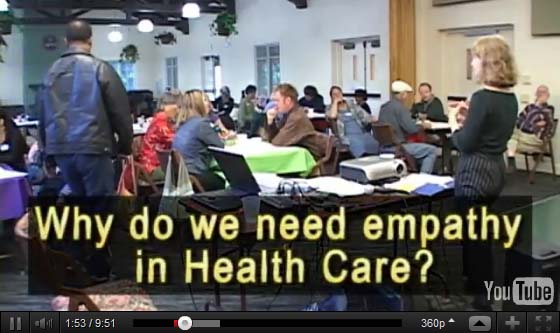
We had a wonderful meeting at
the first Empathy Healthcare Café on June 25th, 2009. We received so many comments
like, "great Café", "what's next?" and "how can we keep this going?" Thank
you to everyone that contributed time, energy, ideas, stories, video,
supplies, resources,
etc. to hosting the Café. Below is the video of the Café.
From Joan. "Thank you for attending and creating a special evening. As many of
you mentioned to me the energy and ideas in the room were truly inspiring! The
list that is attached is a compilation of the ideas everyone contributed
during the action item session. There
were many comments, in your reflections and after the close of the Café about
“let’s keep going.” If you would like to get together to put your ideas into
the next phase just respond to this email, and then we can pick a time, and
place to work on an Empathy Grass Roots Movement." Joan Kuenz