Bill
Drayton, "The course of human history has been towards a
more and more empathy based society. And this is the critical moment
where we shift to everyone being powerful. It's the only way you can
have real equality.
Jill Vialet, "With Playworks we are going in and are working on recess
and we're bringing play into the school in this very constructive and
positive way. It isn't about us coming in and doing it for the
kids, or to the kids, but rather by norming empathy, the kids become
the primary actors and the kids who are achieving these really
significant changes."
2012-05-17 - Bill Drayton: Empathy-Based Ethics: A Strategic
Essential
The rules of this new world are still undefined. They are
in a state of flux and as the world becomes more complex, the original
rules don’t apply. In this world, where value is first in contributing
to change, people need different skills. They must master empathy first;
it is the foundation of everything else.
2012-05-09 -
Ashoka: Innovators For The Public: "The Future of Social
Entrepreneurship" Florida Bill Drayton talks about the importance of empathy. The Future of Social Entrepreneurship by Bill Drayton, CEO of
Ashoka; Alberto Ibargüen, CEO of Knight Foundation; and Matthew Bishop,
Editor of
the Economist
Static rules based world and approach versus Empathy
We will need empathy to adapt to a changing
world
Principals and teachers need to understand the
importance of empathy'
A collaborative entrepreneurship trust across the
world
To make sure 5 year from now 80% of the principles in
north America know this
Parents looking at schools, asking how good is your
school at teaching empathy?
"how did your brother feel when you hit him"
Collaborative entrepreneurship is new, working on a
fundamental pattern shift like this.
Every Child must master empathy
4:13 Some of the critics might say, how do you teach
empathy?
Isn't it something that comes from within and
is your own experience?
And is empathy just another buzz word?
How do we insure that schools, businesses,
organizations are taking this seriously?
you can measure empathy and I think we will get
better at measuring it
the Canadians have very good measurements of bullying
rates.
bullying is not empathic
can children identify feelings - anger?
read emotions
Mary Gordon - Roots of Empathy - very successful
what is baby saying and feeling?
good modeling of empathy
give children a chance
We got most people literate, now we need empathy
literacy
empathy, leadership, teambuilding
7:40 Can you bring empathy to private sector?
companies have to be a team of teams
no empathy no team
like the principles - they don't know how important
this is
must master the difficult skill of empathy
faster the change, the more empathy you need.
need to understand person in front of you, around
you, groups, past and future
complicated - takes significant work
10:00 Are other societies better at empathy?
difficult
Indonesia - don't upset others
US has advantage - created democracy
lost the democracy - by creating empire
associative skills - but losing skills
need to turn it around
12:20 - What Ashoka doing in US?
social entrepreneurship is going up
15:25 - What do we need to work on?
1. this is the movement where we need to move from a
small elite to where everyone is a change maker
2. we have just learned how to do collaborative
entrepreneurship
empathy and entrepreneurship
figure out collaborative entrepreneurship
19:20 What's been the greatest impact?
internet technology - communications - coming
together
20:50 - What's your advice?
give yourself permission - to change the world
gently ignore the people who tell you- you can't
2008 -
Bill Drayton - Ashoka - Empathy
"Drayton makes a compelling case for applied empathy as an integral and
foundational part of any educational model."
00:00The largest single group of leading social
entrepreneurs Ashoka fellows focuses on children and young people.
Maybe 450 out of the 2,400 all together.
00:40 What really matters is whether
or not children master applied empathy.
And whether young people, 12 to
20 master empathy teamwork leadership. .....
1:00 Every child must master
applied empathy or they are going to be marginalized. If you are not
given the tools of applied empathy as a young child, which is
inexcusable, if that didn't happen, we shouldn't be blaming you.
We should be blaming us.
That really makes me angry, because we're doing
that. Maybe 25-30 percent of the worlds is marginalized because we
failed to do something so simple.
1:40 We have to have to have a revolution
analogous to the civil rights movement or the women's movement, so
that all the young people, not just the children of the few fortunate
families who go to the best schools that actually encourage this.
That
everyone grasps empathy, practices it, and practices empathy teamwork
leadership. This is the most fundamental revolution we have to get
through.
"This is a world
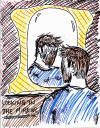
where you need a higher form of empathy, where you observe yourself,
watch other people around you, and then you find yourself
understanding and interacting with various combinations of people. So
this goes to say that the system around you is changing. You need to
contribute to the system and avoid doing damage. So, you require a
very sophisticated set of skills...
So, we need to have literacy and social skills so that
people have the empathetic skills, teamwork skills and leadership
skills that could effect change. ...
Listening is understanding. The skill of empathy is a
must to be able to listen! Then you can listen to people, the
environment and sometimes to the future! One can listen better if one
sees the whole!”
Thirty years of
carefully examining the connections that bind us, one to the other, has
led Bill to see how empathy is the one significant thread that weaves
its way through the tapestry of all of the fellows’ works. Every Ashoka
fellow is gifted with the ability to view multiple perspectives…to see
through the lens of another…to walk in someone else shoes and in my
words…love deeply, authentically and wholly.