|



|
|
Empathy Teams
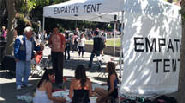
>Talking Points Who are you / what is this?We are the Empathy Team. This is our Empathy Listening Post. What are you doing here?We’re here as a team offering a service to people at this event and others—to give people an experience of empathic presence, and offer resources and support for anyone who wants to learn more about the quality of empathy in their own lives. We’re also here to promote the practices of empathy, mutual understanding, and nonviolent communication—as a transformative force in creating the world we want for ourselves and for future generations. We believe in the values of caring, presence, communication, diversity, freedom, and integrity. Why are you doing this?We’ve created the Empathy Listening Post because we’ve identified an “empathy deficit” in our society, and we want to promote practices that can turn that around. The empathy deficit is something that happens on an individual level and at a societal level. We grow up being told that you have to take care of yourself and let others fend for themselves—that if you care about others, you might not get your own needs met. The empathy deficit creates isolation and alienation. Violence and fear are everywhere, and it’s hard to reach the potential that we all have for connection with other people, other living beings and one’s self. Many people aren’t even aware of the isolation, alienation, and disconnection that they feel. We’re here to demonstrate and model our intention to close that gap, and empower other people to put empathy into practice in their lives —to strengthen the social fabric through practices of mutual understanding and compassion. A rising tide lifts all boats – we believe that taking care of each other helps get our own needs met. We are here because we want to help improve others’ well-being. We find that in doing so we also improve our own. Isn’t this unrealistic?Good question. We have had the experience of really connecting with other people, being connected to life, and being transformed by the practice of empathy. (You can say this: ) My world has been changed, and that makes me think “why can’t others’ lives be changed?” We’re here to say that we believe that a global culture of empathy and caring is possible. What do you hope to achieve?We envision a global culture of empathy, in a world where people experience the joy of being connected to each other and interconnected with all life. In this world people can easily transform isolation, judgment, and violence into relationship, communication, and well-being. This may
not fully happen in our lifetimes, but we feel it is a vision worth
working for. What is empathy?Empathy is a respectful understanding of what someone is experiencing. Empathy happens in the absence of judgment. Some people think of empathy as “deep listening.” In empathy, there’s nothing to fix, and nothing to do but be present and “get into the other person’s world.” What is NVC / nonviolent communication?NVC, or nonviolent communication, is language, thoughts, communication skills and other methods that allow us to connect with others—and ourselves—in a way that make compassion a natural part of life. NVC allows us to dramatically improve relationships by understanding others and expressing ourselves without blame, but without compromising our values or sacrificing our needs. The result is real connection with others and resolution of even the most difficult conflicts. What difference does nonviolent communication make?Thousands of people have experienced NVC benefiting their lives: in workplaces, homes, communities; in restorative justice; in places that offer social services; in academia, politics, and more. It’s applicable anyplace where people have relationships to others. It creates a quality of connection between people that allows for collaboration and mutual understanding. What is BayNVC?BayNVC is a hub for the training and practice of nonviolent communication in the Bay Area. What is your relationship to BayNVC?This is a volunteer-driven effort by people involved in non-violent communications to apply what we’ve learned through BayNVC—to practice what we’ve learned and contribute to the well-being of our community. Where do you do your Empathic Listening Posts?We go where we’re inspired to go and where people congregate: places like festivals and farmer’s markets, and places where people experience stress, such as protests. We go to schools and even places in nature. We’re always open to hearing your ideas for where the Empathy Team can help. You can contact BayNVC at nvc@baynvc.org or 510-433-0700. Will you come to my event?Contact us to discuss the details; we’re open to hearing about your event. How can I help?There are many ways to help. You can help in our mission by learning the practices of nonviolent communication, using it in your life—and then spreading the word about what it’s done for you, and how you envision that it can change the world. We are always accepting donations of time and money, which will inspire people to be more connected to each other, and to operate more fully in different venues. We also
welcome people’s feedback on projects; media support; organizational
development support; and advice. |
|
||||